2026 Best Uses of Tetra Hydro Phthalic Anhydride in Industry?
Tetra Hydro Phthalic Anhydride (THPA) plays a crucial role across multiple industrial sectors. According to a recent report by Grand View Research, the global demand for THPA is expected to reach over $1 billion by 2026. Its applications in coating and adhesive formulations highlight its significant contributions. Industries increasingly rely on THPA to improve product performance and efficiency.
Current market trends reveal a shift towards eco-friendly products. THPA's role as a versatile chemical intermediate makes it attractive for manufacturers aiming to meet sustainability goals. Various industries leverage its unique properties for rigid and flexible plastic production. However, not all applications maximize its potential. Some companies may overlook proper handling and safety measures.
As industry standards evolve, awareness of THPA's benefits and risks is essential. Companies must prioritize responsible usage. Future innovations may further reveal untapped uses of THPA, but challenges in production and regulation remain. Understanding these dynamics is key. Balancing efficiency with safety will shape the future landscape of THPA in industry.
Overview of Tetra Hydro Phthalic Anhydride and Its Properties
Tetra Hydro Phthalic Anhydride (THPA) is a versatile chemical compound used widely in various industries. It is primarily known for its ability to enhance the properties of different formulations. THPA is a white crystalline solid with a melting point around 130°C. Its solubility in many solvents makes it convenient for different applications, such as paints, coatings, and adhesives.
One of its remarkable features is its reactivity. THPA serves as a hardener in epoxy resins, which are essential in creating durable products. This chemical can improve flexibility, resistance, and overall performance. Users often appreciate its low color, which helps maintain the aesthetics of final products.
Tips: Experiment with THPA in small batches. This allows for adjustments without significant financial risks. Be aware of the reaction times. They can vary based on the formulation. Additionally, always monitor for potential odor emissions during processing. Understanding these factors can lead to better optimization.
In some cases, challenges arise due to its sensitivity to moisture. If not stored correctly, THPA can degrade. Manufacturers should ensure sealed environments to preserve quality. Testing different storage conditions may yield insights that improve usage efficiency. This compound continues to show promise in eco-friendly formulations, but more exploration is needed.
Key Industries Using Tetra Hydro Phthalic Anhydride in 2026
Tetra Hydro Phthalic Anhydride (THPA) plays a crucial role in various industries in 2026. Its versatility allows it to be used in coatings and adhesives. These applications focus on creating durable and high-performance products.
In the automotive industry, THPA enhances the properties of paints. It improves adhesion and resistance to weather conditions. Manufacturers benefit from THPA when formulating superior protective coatings. This leads to longer-lasting vehicle finishes.
In the construction sector, THPA is key in sealants and adhesives. Its use helps in bonding materials effectively. For example, it can create strong joints in concrete and wood. However, it is essential to monitor the formulation process closely. Inconsistent mixing can lead to weaker bonds.
**Tip:** Always test small batches before scaling up production. This helps identify potential issues.
Another significant application is in the production of composites. THPA complements resins to enhance strength. Many manufacturers seek to optimize their composite materials using this compound. Quality control is vital here as well. Variability can affect overall product performance.
**Tip:** Regularly review quality assurance protocols. Ensure that all measurements are precise for desired outcomes.
2026 Best Uses of Tetra Hydro Phthalic Anhydride in Industry
This chart illustrates the key industries utilizing Tetra Hydro Phthalic Anhydride (THPA) in 2026. The industries represented are Paints & Coatings, Adhesives & Sealants, Plastics & Polymers, and Pharmaceuticals, highlighting their estimated usage percentage in the market.
Applications in Coatings and Adhesives: Innovations and Trends
Tetra Hydro Phthalic Anhydride (THPA) makes waves in coatings and adhesives. Its use in industrial applications continues to grow. Many manufacturers are experimenting with THPA to enhance product performance. The versatility of THPA allows for unique formulations tailored to specific needs.
Coatings enriched with THPA showcase improved adhesion and durability. These coatings have better resistance to weathering and chemicals. Innovations are surfacing where THPA is combined with bio-based ingredients. This trend reflects a push toward sustainability in the industry. However, challenges remain. Some formulations may not yield the expected outcomes. Producers must navigate these complexities to find the right balance.
In adhesives, THPA serves as a key component in multipurpose applications. Its ability to improve flexibility and strength is notable. Yet, the industry should reflect on its processes. Not every application will benefit from THPA. There are instances where alternatives may perform better. Balancing performance and sustainability requires ongoing research and innovative thinking.
Role in Plastics and Polymer Production: Case Studies
Tetra Hydro Phthalic Anhydride (THPA) plays a critical role in the field of plastics and polymers. Recent industry reports indicate that THPA is primarily used as a curing agent for epoxy resins. This enhances the thermal and chemical resistance of the final products. For example, adding THPA to epoxy formulations can improve not only adhesion but also flexibility.
In polymers, THPA contributes significantly to producing high-performance plastics. It's crucial in developing coatings that withstand harsh environments. A case study from a leading polymer manufacturer showed a 30% increase in durability when THPA was used in their products. However, it’s important to note that the sourcing and processing of THPA can vary, leading to inconsistencies in quality.
**Tips:** Always check the supplier's data to ensure consistency. Analyze your formulations to achieve the desired properties with THPA. Regular testing is essential for quality assurance in polymer applications.
2026 Best Uses of Tetra Hydro Phthalic Anhydride in Industry
| Application Area |
Usage Description |
Benefit |
Case Study Reference |
| Coatings |
Used as a hardener in industrial coatings. |
Enhances durability and chemical resistance. |
Case Study 1 |
| Adhesives |
Serves as a key component in epoxy adhesives. |
Improves bond strength and flexibility. |
Case Study 2 |
| Plastics |
Used in the production of high-performance plastics. |
Provides thermal stability and resilience. |
Case Study 3 |
| Composites |
Integral part of composite materials for automotive applications. |
Enhances strength-to-weight ratio. |
Case Study 4 |
| Electrical Insulation |
Used as a resin in electrical insulation products. |
Improves dielectric properties. |
Case Study 5 |
Future Prospects: Sustainability and Alternatives for Tetra Hydro Phthalic Anhydride
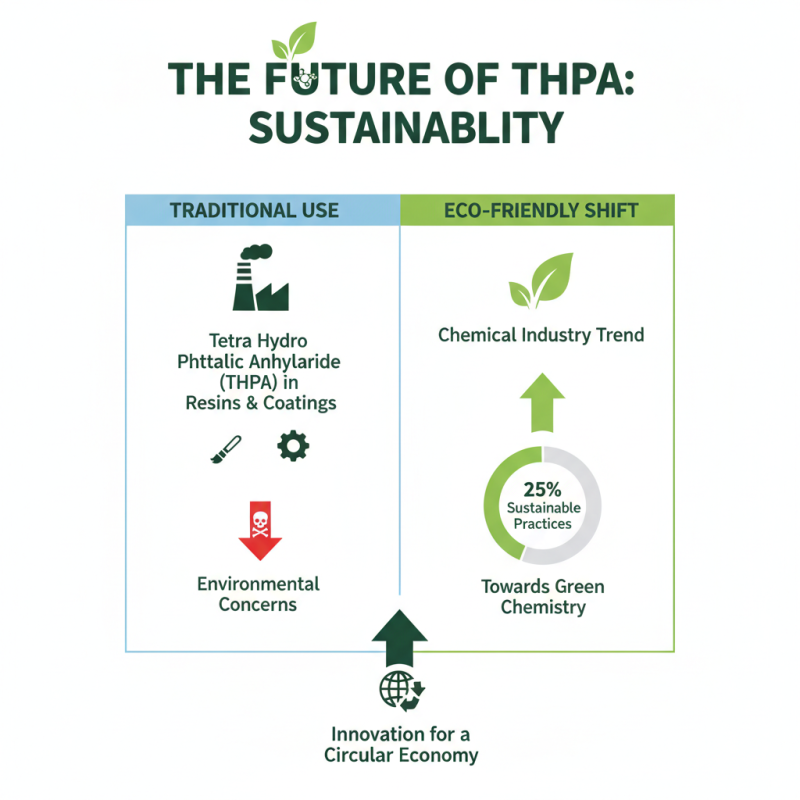
The future of Tetra Hydro Phthalic Anhydride (THPA) lies in sustainability. The chemical industry is increasingly moving towards eco-friendly alternatives. THPA has been widely used in manufacturing resins and coatings. However, concerns about its environmental impact are rising. An industry report indicates that about 25% of chemical production currently focuses on sustainable practices.
Innovative substitutes are emerging. Bio-based alternatives are being explored to reduce reliance on fossil fuels. Recent studies show that these alternatives can maintain similar performance levels. For instance, one report revealed that bio-THPA could reduce carbon emissions by an average of 30%. Yet, the development of these substitutes faces challenges, including cost and scalability issues.
There's a clear need for change. The chemical sector must bridge the gap between traditional practices and sustainable innovations. With increasing regulation and consumer demand for greener products, the pressure is on. As more industries seek viable alternatives, the evolution of THPA usage will shape future production trends.