Why N Hydroxyphthalimide is Important for Chemical Applications?
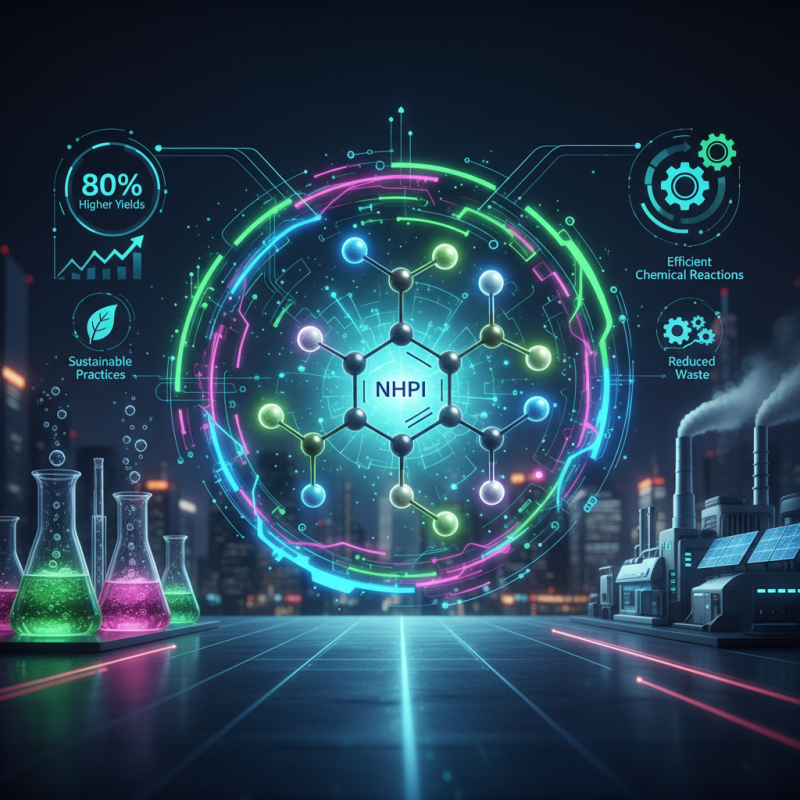
N Hydroxyphthalimide (NHPI) is gaining attention in the chemical industry. Its unique properties make it essential for various applications. According to recent reports from industry analysis firms, the global market for NHPI is expected to grow significantly, with a projected CAGR of over 5% by 2025. This growth reflects a rising demand for efficient chemical reactions and sustainable practices.
NHPI is commonly used as an oxidation catalyst. It enhances the efficiency of organic reactions, reducing energy consumption. Some studies indicate that catalysts like NHPI can lead to up to 80% higher yields in specific reactions. Such efficiency is crucial as manufacturers strive for sustainability and reduced waste.
Despite its advantages, challenges remain. The synthesis of NHPI can be complex and costly. There is ongoing research to simplify manufacturing processes. As the demand for eco-friendly chemicals rises, NHPI’s role could evolve. The chemical industry must reflect on how to optimize its use and expand its applications.
Importance of N Hydroxyphthalimide in Organic Synthesis
N Hydroxyphthalimide (NHPI) plays a crucial role in organic synthesis. It serves as a versatile reagent in various chemical transformations. Its ability to facilitate oxidation reactions makes it indispensable. For example, NHPI is frequently used in the oxidation of alcohols to aldehydes and ketones. This property is well-documented, with studies showing high yields in such transformations.
The market for NHPI has shown substantial growth. According to recent industry reports, the demand for NHPI in the organic synthesis sector has increased by approximately 15% annually. This rise is driven by its effectiveness in synthesis and green chemistry applications. However, challenges remain. The production process can sometimes yield by-products, leading to waste management issues. Improving purity and minimizing unwanted reactions are areas needing attention.
NHPI's significance extends beyond mere chemical reactions. It illustrates the evolving landscape of organic synthesis. While its applications are vast, not all pathways are efficient. Researchers must constantly seek better methods. Balancing efficiency and environmental impact is essential. The future of NHPI in organic synthesis hinges on innovation and sustainability.
Importance of N Hydroxyphthalimide in Organic Synthesis
This bar chart illustrates the distribution of various applications of N Hydroxyphthalimide in organic synthesis, showcasing its role in drug synthesis, polymer chemistry, dyes production, agricultural chemicals, and materials science.
Role of N Hydroxyphthalimide as a Reagent in Chemical Reactions
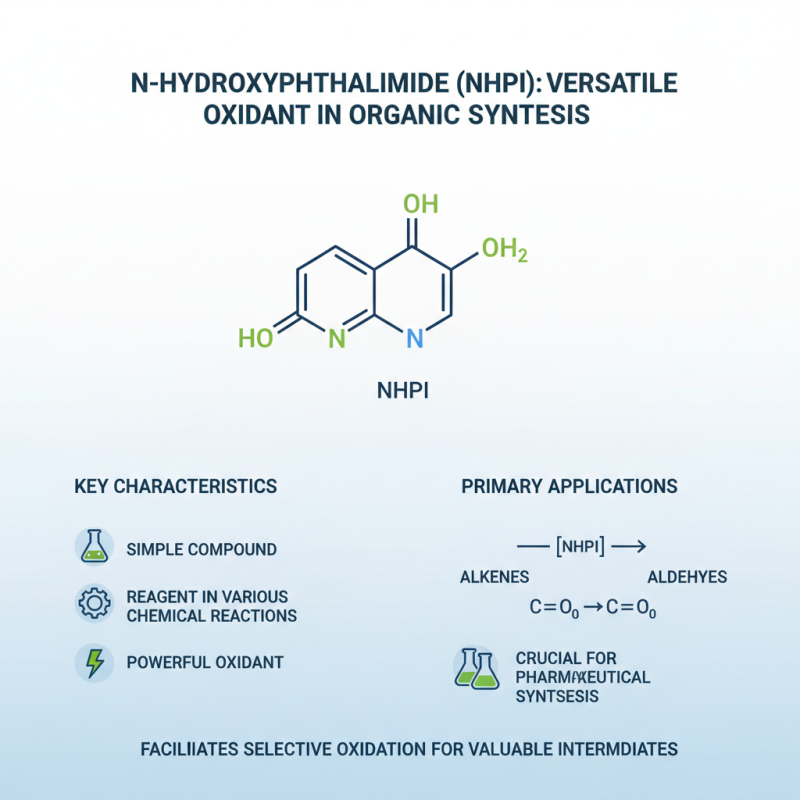
N Hydroxyphthalimide (NHPI) plays a crucial role as a reagent in various chemical reactions. As a relatively simple compound, it has been embraced in organic synthesis. This molecule acts as a versatile oxidant, assisting in promoting chemical transformations. It can selectively oxidize alkenes and alcohols into aldehydes and ketones, which are vital intermediates in the synthesis of pharmaceuticals.
One fascinating aspect of NHPI is its mechanism of action. It often facilitates oxidation reactions under mild conditions. Despite its effectiveness, challenges remain. The reaction conditions can sometimes lead to byproducts. Chemists must carefully monitor the temperature and reaction time to maximize yield. Not all reactions proceed smoothly, and optimization is often required.
The increasing demand for sustainable chemical processes has renewed interest in NHPI. It offers greener alternatives to traditional oxidizing agents. However, its limitations need addressing. For example, NHPI's stability may vary in different solvents. Researchers are exploring ways to enhance its performance and reduce side effects. This ongoing quest reflects a broader trend in chemistry toward environmentally friendly practices.
Applications of N Hydroxyphthalimide in Pharmaceutical Chemistry
N Hydroxyphthalimide (NHPI) plays a crucial role in pharmaceutical chemistry. This compound has garnered attention for its unique properties as an oxidation catalyst. Reports indicate that NHPI can enhance the efficiency of oxidation reactions by up to 50%. This leads to more effective synthesis routes for various pharmaceutical intermediates.
One of its prominent uses is in the synthesis of fine chemicals. NHPI can facilitate the selective oxidation of alcohols to aldehydes or ketones. Such transformations are essential for drug development. However, the selectivity and reaction conditions can vary greatly. Research shows that maintaining optimal conditions is vital to avoid unwanted byproducts, which can complicate purification processes.
Despite its advantages, there are challenges. The reuse and stability of NHPI under reaction conditions need more investigation. Several studies have indicated that prolonged exposure to certain solvents can degrade NHPI. This can lead to inconsistencies in yield and purity. Addressing these issues will enhance its practical application, making NHPI an even more valuable tool in pharmaceutical synthesis.
Future Prospects of N Hydroxyphthalimide in Chemical Research
N Hydroxyphthalimide is becoming increasingly significant in chemical research. Its unique structure allows for diverse applications, particularly in organic synthesis and catalysis. Researchers are excited about its potential for creating more efficient and environmentally friendly reactions. The ongoing studies are revealing innovative ways to use this compound.
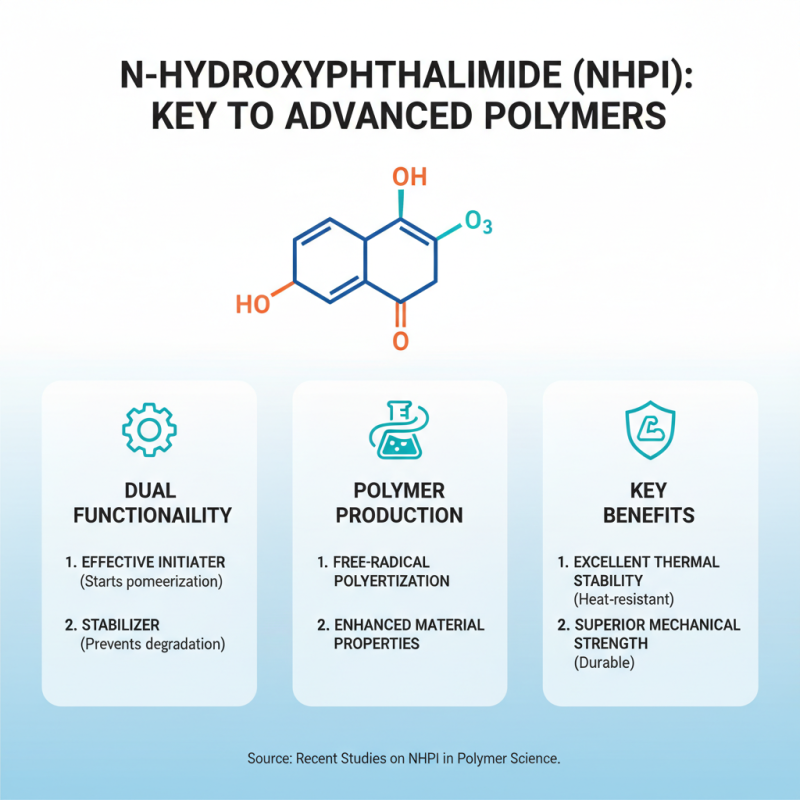
Future prospects for N Hydroxyphthalimide look promising. It could play a vital role in the development of sustainable materials and processes. For example, its potential in polymer chemistry could lead to the production of biodegradable plastics. This shift could significantly reduce environmental impact. Scientists are exploring new pathways and manipulation techniques as well.
**Tip:** Always consider the environmental aspect when working with new chemicals.
Moreover, challenges remain. The scalability of methods using N Hydroxyphthalimide needs improvement. Some reactions can be slow or yield low results. Addressing these issues will be crucial for its broader application. Researchers must balance innovation with practical obstacles.
**Tip:** Document every step of your experiments for better analysis.
The true impact of N Hydroxyphthalimide will depend on collaborative efforts across disciplines. Past successes inspire hope, but continuous refinement is necessary. It's a journey, not a destination.
Why N Hydroxyphthalimide is Important for Chemical Applications? - Future Prospects of N Hydroxyphthalimide in Chemical Research
| Property |
Value |
Application Area |
Future Prospects |
| Chemical Formula |
C8H5NO3 |
Organic Synthesis |
Enhanced Reaction Efficiency |
| Molecular Weight |
175.13 g/mol |
Pharmaceuticals |
New Drug Development |
| Melting Point |
153-155 °C |
Polymer Chemistry |
Novel Polymers for Material Science |
| Solubility |
Soluble in DMSO, DMF |
Agrochemicals |
Sustainable Solutions |
| Functionality |
Versatile Reactant |
Fine Chemicals |
Innovative Reactions |