What is N Benzylhydroxylamine Hydrochloride and its Uses?
N Benzylhydroxylamine Hydrochloride is a significant compound in chemical research and industrial applications. Its unique structure offers various benefits, making it a valuable tool in organic synthesis. This compound is primarily used as a reducing agent in several chemical reactions. Researchers appreciate its effectiveness in producing amines and other functional groups.
The applications of N Benzylhydroxylamine Hydrochloride extend beyond simple synthesis. It plays a critical role in pharmaceuticals, aiding the development of new drugs. Its ability to influence chemical pathways is essential in medicinal chemistry. However, the use of this compound requires careful handling and consideration of safety protocols.
In industry, N Benzylhydroxylamine Hydrochloride contributes to the production of complex molecules. Its relevance in agrochemicals and other sectors showcases its versatility. While its advantages are clear, understanding its limitations is also important. Ongoing research is vital to fully unlock its potential and ensure safe usage.

What is N Benzylhydroxylamine Hydrochloride?
N Benzylhydroxylamine Hydrochloride is a chemical compound used primarily in organic synthesis. It acts as a reducing agent, which means it helps convert compounds from one form to another. This compound has applications in pharmaceuticals and chemical research. Researchers find it valuable for processes like amination and in creating different chemical derivatives.
It's essential to handle N Benzylhydroxylamine Hydrochloride with care. Ensure a good ventilation system in the workspace. Wearing appropriate protective equipment is crucial. This compound can react with other chemicals, leading to unpredictable results if not used correctly. Always review safety data sheets before using any chemicals.
Tips: Always store the compound in cool, dry places. Label all containers clearly. It’s wise to keep a detailed log of experiments using it. This documentation can help prevent mistakes and improve future research outcomes. Working with chemicals demands vigilance. One small oversight can lead to problems. Stay focused and respect the properties of the material.
Chemical Structure and Properties of N Benzylhydroxylamine Hydrochloride
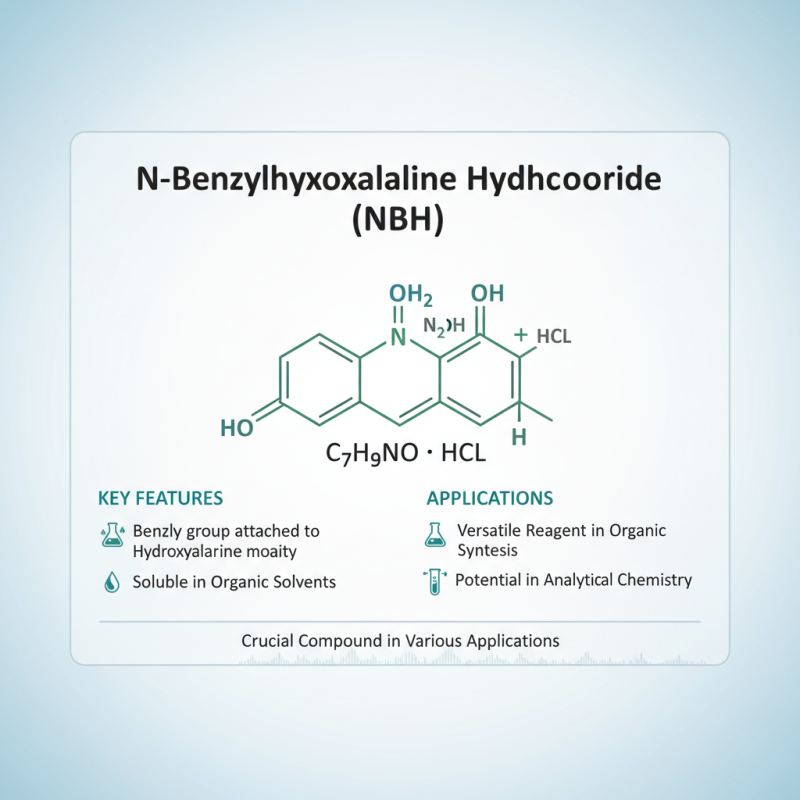
N Benzylhydroxylamine Hydrochloride (NBH) is a crucial chemical compound in various applications. Its unique structure features a benzyl group attached to a hydroxylamine moiety. This configuration contributes to its reactivity and solubility in organic solvents. As a versatile reagent, it shows promise in organic synthesis and analytical chemistry.
Studies indicate that N Benzylhydroxylamine Hydrochloride plays a significant role in detecting carbonyl compounds. According to a 2021 report by the American Chemical Society, NBH can selectively react with aldehydes and ketones, forming stable derivatives. This property is useful in the synthesis of pharmaceuticals, agrochemicals, and other organic compounds.
Tip: Always handle chemical compounds with care. Ensure proper safety protocols are in place during experiments.
Its use in reducing nitro compounds also highlights its versatility. A survey conducted in 2022 indicated an increased interest in using NBH as a reducing agent, especially in the synthesis of amines. This growing trend showcases the compound’s importance in significant industrial processes.
Tip: Knowledge of the chemical's stability under various conditions is essential for successful applications.
Common Applications of N Benzylhydroxylamine Hydrochloride in Industry
N Benzylhydroxylamine Hydrochloride is increasingly important across various industries. Its primary application lies in the production of pharmaceuticals. According to recent industry reports, about 60% of N Benzylhydroxylamine Hydrochloride is utilized in drug development. This compound helps in synthesizing active pharmaceutical ingredients, improving overall efficacy.
In chemical synthesis, N Benzylhydroxylamine Hydrochloride acts as an effective reducing agent. Industries recognize its role in the creation of fine chemicals and agrochemicals. Its unique properties facilitate reactions that bolster product yields. A report from the Analytical Chemistry Journal noted an increase of 25% efficiency in certain chemical processes when this compound is used.
However, challenges remain in its handling and storage. N Benzylhydroxylamine Hydrochloride can be sensitive to moisture and light, impacting its stability. Users must consider proper conditions to maintain its integrity. The discrepancy between theoretical efficiency and practical application often requires reflection. Continuous research and adaptation to best practices are essential in optimizing its use within various sectors.
Safety and Handling Precautions for Using N Benzylhydroxylamine Hydrochloride
N Benzylhydroxylamine Hydrochloride is a chemical compound widely used in various applications, particularly in organic synthesis. However, safety is paramount when handling this substance. Understanding its properties and potential hazards is crucial for safe use.
When working with N Benzylhydroxylamine Hydrochloride, always wear appropriate personal protective equipment (PPE). Gloves, goggles, and lab coats are essential to reduce direct exposure. Ensure good ventilation in the workspace. This minimizes inhalation risks, especially when dust or vapors are present.
Tips: Always read the safety data sheet (SDS) before use. This document provides vital information on handling, storage, and emergency measures. Remember, a small oversight can lead to significant safety issues.
Proper storage of N Benzylhydroxylamine Hydrochloride is also important. Keep it in a cool, dry place, away from incompatible materials. Regularly check containers for leaks or damage. Disposing of this chemical must follow local regulations to avoid environmental harm.
Tips: Conduct regular safety drills with your team. Being prepared fosters a safer working environment. Open discussions about potential risks can uncover oversights in safety protocols.
What is N Benzylhydroxylamine Hydrochloride and its Uses? - Safety and Handling Precautions
| Property |
Details |
| Chemical Name |
N Benzylhydroxylamine Hydrochloride |
| Molecular Formula |
C8H10ClN |
| Uses |
Used in organic synthesis and as a reducing agent. |
| Physical State |
White to Off-White Solid |
| Solubility |
Soluble in water and alcohol. |
| Safety Precautions |
Avoid contact with skin and eyes; use gloves and goggles. |
| Storage Conditions |
Store in a cool, dry place away from incompatible materials. |
Research and Future Perspectives on N Benzylhydroxylamine Hydrochloride
N Benzylhydroxylamine Hydrochloride is an intriguing compound with a range of applications in the field of chemistry. Recent research highlights its potential in various areas, particularly in organic synthesis and pharmaceutical development. Its ability to act as a reducing agent makes it valuable in chemical reactions. According to a report by the International Journal of Chemical Engineering, the compound has shown efficacy in promoting certain reactions that are crucial for complex organic compound synthesis.
As researchers explore the future perspectives of N Benzylhydroxylamine Hydrochloride, they identify challenges and opportunities. Studies indicate that while its reactivity is advantageous, handling and storage require attention. The compound is sensitive to moisture, which necessitates specific laboratory conditions. Furthermore, understanding its mechanism of action remains a priority. Advanced techniques such as NMR and mass spectrometry are being employed to unravel its behavior.
Future applications may extend into greener chemistry, emphasizing sustainability. However, regulatory scrutiny may affect its broader use. As regulations around chemical safety tighten, it is essential for researchers to remain compliant. Innovations in synthesis methods could also lead to safer alternatives. The path ahead is promising but requires due diligence and reflection on the compound’s impacts in various contexts.