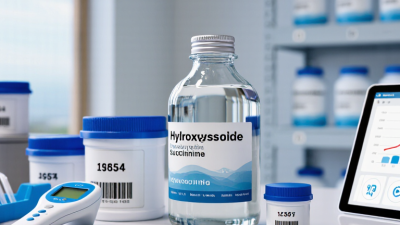
Buying N Hydroxy Succinimide in 2026 requires more than comparing price per kilogram. Purity, water content, packaging, batch traceability, and delivery conditions can affect how reliably this reactive reagent performs. Small differences matter. A damp or poorly sealed bottle may be unsuitable for a sensitive coupling workflow, even when its label looks convincing.
Grand View Research’s bioconjugation market report estimates that the broader market reached about USD 5.7 billion in 2023 and projects continued growth through 2030. This figure does not measure N Hydroxy Succinimide sales alone. It does, however, reflect expanding activity in bioconjugation, where NHS ester chemistry is widely used. Greg T. Hermanson, author of Bioconjugate Techniques, describes NHS esters as amine-reactive reagents used to link biomolecules. His work is a useful technical reference, but it does not replace a supplier’s current certificate of analysis.
For buyers, the practical questions are specific: Is the assay method stated? Are storage and retest dates clear? Can the supplier provide a recent batch document and answer questions about shipping conditions? Compare these details alongside price, lead time, and minimum order quantity. Ask for evidence, not just a polished product page. And pause when specifications are vague. A lower quote can be a false economy. This guide examines how to assess suppliers, verify product documentation, and choose a grade that fits the intended application in 2026. Some market figures are broad estimates, so treat them as context—not a purchasing forecast.
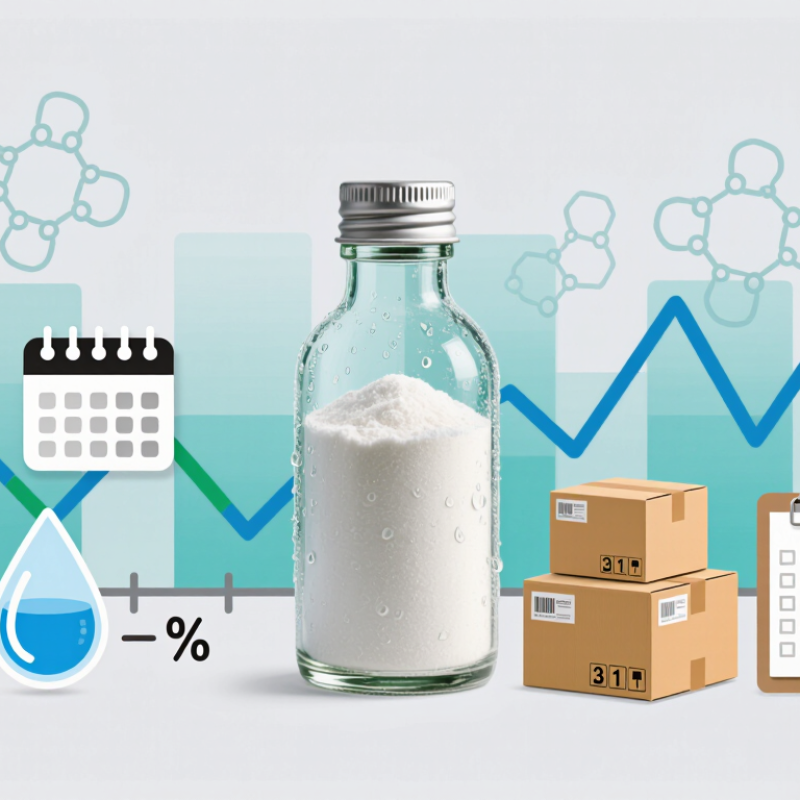
N-Hydroxysuccinimide, commonly called NHS, is an organic compound used to help form stable amide bonds. With a carbodiimide coupling agent, it converts a carboxyl group into a more reactive NHS ester. That ester can react with primary amines on proteins, peptides, or other molecules. The process supports protein labeling, surface immobilization, and bioconjugation. NHS is the starting reagent; it is not itself the NHS ester. A small distinction, but an important one. MarketsandMarkets’ 2024 Peptide Synthesis Market report estimated the market at about USD 638 million in 2023, with projected growth to roughly USD 1.04 billion by 2028. This broad market estimate signals activity in peptide research, not NHS sales specifically.
For a 2026 purchase, match the grade to the intended work: research, synthesis, or another defined application. Check the certificate of analysis for assay, test method, and batch number, then compare it with the specification your procedure requires. Review the safety data sheet, packaging, storage guidance, and stated shelf life. Moisture exposure can affect reagent performance, so intact packaging and clear storage instructions matter. The details matter. A high assay alone does not guarantee a successful coupling; solvent, pH, timing, and the quality of other reagents also influence results. Ask for recent batch documentation before ordering, and verify that the supplier can provide traceable records. Market estimates vary, and they cannot replace batch-specific evidence.

When buying N-hydroxysuccinimide in 2026, match the grade to the work, not just the price. For routine synthesis, a suitable reagent grade may be enough. For quantitative or tightly controlled work, look for an analytical grade with a stated assay and lot-specific certificate of analysis. Check the intended use with your laboratory’s procedures. “High purity” alone is not a specification.
Compare the assay, water content, appearance, and any listed impurity limits. A white crystalline powder should arrive in a sealed container, with its lot number and storage guidance clearly marked. If moisture could affect your reaction, ask for water-content data rather than assuming the assay tells the whole story. Particle size can matter for handling and dissolution, too. Not always, but sometimes. Review the safety data sheet and confirm that the supplier can provide traceable documentation. A lower-cost option may still be appropriate, though I would not skip the certificate review.
Tips: Before ordering, write down the required assay, documentation, and intended application. Compare those details across current product documents, then confirm uncertain specifications directly with the supplier. Keep the label and lot records with your lab notes.
Compare example assay acceptance targets when specifying NHS for laboratory or process use.
These are example purchasing targets, not standardized NHS grade categories or guaranteed market specifications. Select a target appropriate to the application, then confirm the supplier’s certificate of analysis, test method, water content, impurity limits, packaging, and storage conditions. For moisture-sensitive coupling work, request water-content data in addition to assay.
When sourcing N-hydroxysuccinimide (NHS), begin with a clear specification: CAS number, required assay, packaging size, and intended use. Ask each supplier for a recent, lot-specific certificate of analysis, safety data sheet, and traceability information. Check whether the assay method is stated, not just the purity figure. For moisture-sensitive material, ask how the product is sealed and shipped, then compare that answer with the handling guidance in its safety data sheet. Ask for evidence.
McKinsey’s 2024 supply-chain survey reported that nine in ten respondents had experienced supply-chain challenges in 2023. That finding makes backup stock and realistic lead-time checks worth discussing, even for a small reagent order. Request written lead times, minimum order quantities, and a process for reporting out-of-specification batches. Where practical, evaluate a sample against your own acceptance criteria before placing a larger order. A polished website is not proof of consistent quality. I would also check that technical support can answer specific questions about testing and lot documentation; this step is easy to skip when a quotation looks attractive. Keep the comparison simple: document quality, delivery reliability, and total landed cost side by side.
| Evaluation area | Relevant information | What to request or verify | Practical buying check |
|---|---|---|---|
| Identity | N-Hydroxysuccinimide (NHS); CAS RN 6066-82-6; molecular formula C4H5NO3; molar mass approximately 115.09 g/mol. | Confirm the product name, CAS number, formula, and grade on the quotation and product specification. | Check that the documents describe N-hydroxysuccinimide itself, not an NHS ester or another activated compound. |
| Physical description | Generally supplied as a white to off-white crystalline solid. Reported melting-point specifications commonly fall around 95–100 °C; the exact specification can vary by grade and test method. | Request the current product specification, including appearance and melting-point limits where applicable. | Compare the supplier’s stated limits and test methods rather than treating a typical reference range as a guaranteed release specification. |
| Purity and grade | Purity claims and grade labels are supplier- and application-specific; “reagent,” “research,” and similar labels do not establish identical specifications across sellers. | Obtain a lot-specific certificate of analysis (CoA) stating the assay, method, acceptance limits, and test results. | Match the assay method and impurity limits to your intended use. Do not compare headline purity figures without checking how they were measured. |
| Moisture and impurities | Water content, residual solvents, and other impurities may matter for moisture-sensitive or analytical applications, but are not reported under the same limits by every supplier. | Ask whether water content and relevant impurities are tested, and request numerical results or limits when they affect your process. | For critical applications, define required limits before requesting quotations and confirm that the supplier can document them for the delivered lot. |
| Packaging and quantity | Pack sizes, minimum order quantities, and available packaging are determined by the seller and may differ by grade and destination. | Request available pack sizes, net quantity, packaging material, minimum order quantity, and any repacking details. | Compare the total delivered cost per usable quantity, including shipping, duties, handling fees, and any minimum-order requirement. |
| Storage and shelf life | Storage conditions and retest or expiry dates should be taken from the product’s current label, specification, or safety documentation; they should not be assumed to be identical across products. | Ask for the recommended storage conditions, shelf life or retest period, and remaining shelf life at dispatch. | Confirm that the expected delivery and storage conditions fit your inventory policy and planned use date. |
| Safety documentation | Hazard classification, handling precautions, and transport requirements depend on the applicable safety data and regulations. | Obtain the current safety data sheet (SDS) in the required language and verify that it matches the exact product and jurisdiction. | Review the SDS before purchase for handling, personal protective equipment, storage, spill response, and disposal guidance. |
| Supplier quality and traceability | A reliable transaction should provide traceability from the delivered container to its batch or lot documentation. | Ask for lot identification, a lot-specific CoA, document revision dates, and a process for reporting quality issues. | Check that the lot number on the container matches the accompanying documents and that the supplier explains its complaint and replacement process. |
| Shipping and delivery | Delivery time, shipping method, export paperwork, and import requirements vary by seller, destination, and order size. | Request a written delivery estimate, shipping terms, dispatch location, and confirmation of available export or import documents. | Compare the confirmed delivery estimate and landed cost, not an unverified general lead-time claim. |
| Quote comparison | Price depends on grade, quantity, packaging, destination, and current availability; it should be confirmed directly in a dated quotation. | Request itemized pricing, quote validity, payment terms, shipping charges, taxes or duties, and availability for the required quantity. | Evaluate cost together with documentation, specification fit, traceability, and delivery reliability—not price alone. |
| Recommended purchase workflow | Define the application and required grade; compare documented specifications; verify safety and logistics; then approve the selected lot and order terms. | Keep the quotation, specification, SDS, CoA, purchase order, and receiving records together for the purchased lot. | For a new or critical source, consider evaluating a small quantity before committing to a larger purchase. |
Specifications and commercial terms vary by supplier and lot. Confirm current product documents and applicable local requirements before ordering.
When sourcing N-hydroxysuccinimide (NHS), check that the product name, CAS number, grade, and batch number match across the quotation, label, certificate of analysis (CoA), and safety data sheet. A mismatch may signal a paperwork error—or a traceability problem. Ask for the batch-specific CoA, not a generic specification sheet. It should identify the test methods, results, release date, and acceptance limits for assay, water, and relevant impurities. Details matter.
Verify that the supplier’s quality system and testing laboratory are suitable for your intended use. ISO/IEC 17025 accreditation can support confidence in laboratory competence, but it does not automatically validate every test or product. Check whether the CoA names the testing site and whether the listed methods cover the measurements you need. ICH Q7 provides a useful documentation benchmark: section 6.13 calls for batch records to be retained at least one year after expiry; for materials with retest dates, records should be retained at least three years after complete distribution. Confirm that the supplier can support comparable traceability.
Review packaging condition, storage instructions, and transport records, especially if moisture or temperature could affect your process. Compare reported results with your own incoming inspection plan; a passing CoA is not a substitute for risk-based verification. Ask for clarification when values are missing or methods are vague. PDFs can look convincing. I would still pause before approving a lot if the paperwork cannot connect the tested sample to the container received.
When ordering N-hydroxysuccinimide, specify the required grade, quantity, and packaging, then request the current safety data sheet and lot-specific quality documentation. Check the product name and concentration or purity against your method; similar chemical names can cause costly errors. Confirm the container is sealed, clearly labeled, and suitable for the intended shipment. Ask the supplier how the material will be protected from moisture and physical damage. A low price alone tells you little about traceability or handling quality.
Before dispatch, review the safety data sheet and applicable carrier requirements rather than assuming ordinary parcel rules apply. Keep the original label visible, use secure secondary containment where appropriate, and avoid repacking unless trained and equipped to do so.
On receipt, inspect the package for damage before moving it to a designated storage area. Wear suitable gloves and eye protection when handling, and avoid creating dust. Keep the solid tightly closed in a cool, dry, well-ventilated place, away from incompatible materials; follow the product-specific storage guidance. Keep it dry.
Record receipt dates and lot details. A clean-looking container is not proof of correct storage, so document any uncertainty and resolve it before use.