
Leave Your Message

China Top Abemaciclib Intermediates Manufacturer

China Top Abemaciclib Intermediates Manufacturer represents more than production capacity. It reflects process discipline, analytical control, and dependable communication across international pharmaceutical supply chains. Abemaciclib Intermediates require consistent synthesis, controlled impurities, and clear documentation before they can support reliable active pharmaceutical ingredient manufacturing.

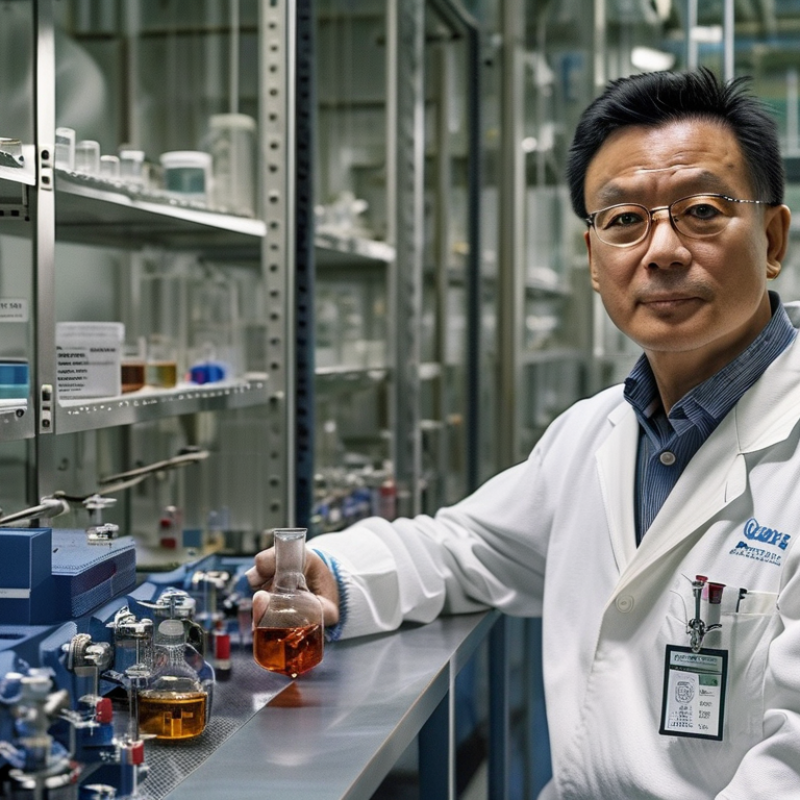
Dr. John B. Toogood, a scientist associated with the discovery of selective CDK4/6 inhibitors, stated, “Selectivity and sustained target inhibition are central to CDK4/6 inhibitor design.” This principle also matters upstream. A small structural deviation in an intermediate may affect later reactions, impurity profiles, or final product performance. The details are visible in practice. They include clean reaction vessels, calibrated instruments, sealed sample bags, and chromatograms reviewed by trained analysts.

A capable Chinese manufacturer should provide batch traceability, validated analytical methods, specification control, and transparent change management. Typical quality evidence may include HPLC results, NMR data, residual solvent testing, water determination, and elemental analysis. Production teams should also understand scale-up risks, especially heat transfer, mixing efficiency, crystallization behavior, and filtration time.

No supplier is flawless. That deserves honest attention. Even a well-controlled process can require further optimization after pilot-scale evaluation. Buyers should therefore review technical packages, audit records, stability information, and representative samples before approval. A strong partnership is built through evidence, not confident promises. For pharmaceutical companies seeking Abemaciclib Intermediates, China offers competitive manufacturing resources, but reliability depends on measurable quality, experienced specialists, and continuous process improvement.
China Top Abemaciclib Intermediates Manufacturer

Abemaciclib Intermediates: CAS Numbers, Structures, and Molecular Weights

China Top Abemaciclib Intermediates Manufacturer

Abemaciclib Intermediates: CAS Numbers, Structures, and Molecular Weights

Abemaciclib intermediate selection begins with identity control. A commonly assessed building block is 2-amino-5-bromopyridine, CAS 1072-97-5. Its formula is C5H5BrN2, with a molecular weight of 173.01 g/mol. The structure contains a pyridine ring, an amino group at C2, and bromine at C5.

Another useful substrate is 2,4-dichloro-5-fluoropyrimidine, CAS 2927-80-4. Its formula is C4HCl2FN2, and its molecular weight is 166.97 g/mol. This compact pyrimidine structure offers two reactive chlorine positions. Route design can therefore influence selectivity, yield, and impurity profiles. The 2022 Global Cancer Observatory report estimated 20 million new cancer cases worldwide. Such demand increases pressure for reliable intermediate supply and documented analytical control.

Tips: Check CAS, formula, and molecular weight against the latest certificate of analysis. I would not trust a catalog entry alone. Small numbering errors can change the entire structure. Confirm residual solvents, assay, water content, and chromatographic purity before scale-up. These details often reveal weaknesses earlier than a final batch review. Sodium and halide balances also deserve attention during process development. A practical manufacturer should provide traceable records, stable packaging, and shipment samples for independent confirmation.


Manufacturing Routes: Reaction Steps, Yields, and Impurity Profiles

China Top Abemaciclib Intermediates Manufacturer

Manufacturing Routes: Reaction Steps, Yields, and Impurity Profiles

A reliable abemaciclib intermediate route usually uses convergent coupling, selective protection, and controlled deprotection. Public process disclosures commonly show 70–95% isolated yields for optimized coupling steps. Deprotection stages may deliver 60–85%, depending on solvent, temperature, and crystallization control. These figures are indicative, not guaranteed. A small yield loss becomes significant during pilot production. Solvent recovery also deserves attention.

Impurity mapping should begin before route transfer. Typical risks include regioisomers, residual coupling reagents, overreaction products, and solvent-related residues. High-performance liquid chromatography should track each critical intermediate, not only the final compound. ICH Q3A(R2) sets a 0.05% reporting threshold for many drug substances with daily doses up to 2 grams. Its identification and qualification thresholds can reach 0.10% and 0.15%, respectively, under specified conditions. ICH Q7 further expects documented impurity control and process understanding. The weak point is often late-stage purification. A visually clean crystal may still carry trace process impurities. Route developers should challenge assumed yields, verify purge factors, and compare batch data across scales. Some public examples remain incomplete. That limitation matters.

Quality Standards: ≥99.0% HPLC Purity and ICH Q3C Solvent Limits

China Top Abemaciclib Intermediates Manufacturer

Quality begins with measurable control. Our target is at least 99.0% HPLC purity for each abemaciclib intermediate batch. HPLC chromatograms are reviewed for the main peak, related substances, and integration consistency. A clean chromatogram matters. Yet, purity alone can mislead.

ICH Q3C(R8) sets strict residual-solvent limits for pharmaceutical manufacturing. For example, acetonitrile is limited to 410 ppm, dichloromethane to 600 ppm, and methanol to 3,000 ppm. Toluene has a 890 ppm limit, while Class 3 solvents, such as ethanol, generally allow up to 5,000 ppm. These figures come from the ICH Q3C(R8) technical guideline and support risk-based testing under USP <467> practices.

In practical production, every batch should include validated HPLC and gas chromatography data. Sampling records, instrument calibration, and storage conditions also need review. Small handling errors can affect solvent results. That risk is easy to underestimate. We use controlled drying, sealed packaging, and traceable batch documentation to reduce variation. Still, a ≥99.0% result should invite questions, not automatic confidence. Analysts must examine unidentified peaks, method recovery, and test repeatability before release. This approach supports reliable supply for pharmaceutical process development and scale-up.

China Manufacturer Qualification: GMP, ISO 9001, COA, and Traceability

China Top Abemaciclib Intermediates Manufacturer

A qualified China manufacturer should show more than a polished certificate. GMP evidence should connect production records with actual batch performance. Operators should document weighing, equipment cleaning, process temperatures, and deviations. Small gaps matter.

The WHO Global Surveillance and Monitoring System report estimates that one in ten medical products in low- and middle-income countries is substandard or falsified. This figure does not describe abemaciclib intermediates directly. It does show why disciplined supplier controls remain essential. A reliable COA should identify the batch, test methods, specifications, assay, water, residual solvents, and related impurities. Results should be reviewed by trained quality personnel, not copied mechanically.

ISO 9001 supports controlled processes, but it cannot replace pharmaceutical GMP. The ISO Survey 2022 reported more than 1.2 million ISO 9001 certificates worldwide, so certification alone does not prove technical capability. Buyers should request current qualification records, analytical method validation summaries, retain-sample policies, and change-control procedures. Traceability should follow each lot from raw-material supplier to final shipment, with signed records and secure electronic audit trails. No system is perfect. A COA can still contain a transcription error. That possibility deserves active review, not comfortable assumptions.

Supplier Capacity Metrics: Batch Size, Lead Time, and Delivery Performance

A reliable China-based abemaciclib intermediates manufacturer should show capacity with clear, repeatable metrics. Batch size matters, but the largest possible batch is not always the best choice. Ask for standard, pilot, and commercial ranges. A supplier should explain equipment limits, yield variation, and release-testing capacity. These details reveal practical manufacturing experience.

Lead time should cover production, quality control, documentation, and shipment preparation. A quoted 30-day schedule means little if testing begins afterward. Request a timeline with fixed milestones and responsible teams. Delivery performance also deserves evidence. Review on-time-in-full records, deviation handling, and communication during delays. A supplier reporting 96% on-time delivery may be more credible than one promising perfection. Perfect forecasts are unrealistic. We have learned that small planning errors can affect a full production window.

Tips: Compare at least six months of delivery data. Define “on time” in the supply agreement. Confirm whether batch size means reactor capacity or released quantity. Check analytical method readiness before placing a larger order. Keep a qualified backup source for critical intermediates. That may feel inefficient, but it protects continuity. Some metrics look impressive until the details are examined.

China Top Abemaciclib Intermediates Manufacturer - Supplier Capacity Metrics: Batch Size, Lead Time, and Delivery Performance

Capacity Metric Typical Reference Range Unit Procurement Significance Recommended Verification Evidence
Pilot or Development Batch Size 1–25 kg per batch Supports process development, analytical method validation, and early formulation work. Pilot-batch records, equipment scale documentation, and representative certificates of analysis.
Commercial Batch Size 25–500 kg per batch Indicates the supplier’s practical production scale for recurring intermediate orders. Batch manufacturing records, reactor capacity list, and three consecutive commercial-batch histories.
Minimum Order Quantity 25–100 kg per order Affects inventory exposure, working capital, and suitability for clinical or small-scale programs. Written quotation, packaging configuration, and order-history samples with confidential details removed.
Standard Production Lead Time 4–10 weeks after order confirmation Helps determine safety-stock requirements and production scheduling flexibility. Production schedule, raw-material availability statement, and documented lead-time performance.
Repeat-Order Lead Time 3–8 weeks Shows the effect of approved specifications, retained raw materials, and established process controls. At least six months of anonymized delivery records and agreed forecast-to-order procedures.
On-Time-In-Full Delivery Performance 90–98 % of shipments Measures whether agreed quantities arrive within the confirmed delivery window. Twelve-month OTIF dashboard using purchase-order, dispatch, and receipt timestamps.
Batch Release Documentation Time 3–7 business days Affects receiving, quality review, and release of material for downstream processing. Sample certificates of analysis, test-result approval workflow, and document turnaround records.
Annual Supply Capacity 0.5–20 metric tons per year Provides an initial view of scalability for development, clinical, and commercial demand. Capacity statement covering equipment, shift pattern, utilization assumptions, and expansion plans.
Typical Export Packaging 5–25 kg per inner or outer pack Supports safe handling, traceability, and shipment planning for moisture- or light-sensitive materials. Packaging specification, label sample, tamper-evidence details, and transport-condition assessment.
Forecast Flexibility ±20–30 % volume adjustment Indicates how well production planning can accommodate changes in demand. Supply agreement, frozen-zone policy, capacity reservation terms, and change-control procedure.

Note: The figures above are non-company-specific industry reference ranges for preliminary supplier evaluation. Actual batch sizes, lead times, annual capacity, and delivery performance should be confirmed through a current quotation, quality questionnaire, audit, and documented shipment records.